

A deep dive into why Kazakhstan has declared Mellstroy wanted, how the case connects to past scandals in Belarus and Russia, and what it means for the streamer’s turbulent rise.
Kazakhstan Puts Mellstroy on the Wanted List — And the Chaos Only Grows

Mellstroy Declared Wanted in Kazakhstan: A British Look at the Latest Chapter of an Endless Saga
If there is such a thing as a modern digital outlaw, then Mellstroy — the Belarus-born showman who turned chaos into a business model — seems determined to claim the title. And this week, Kazakhstan added yet another country to the growing list of places where his name now appears on official wanted boards. According to Kazakhstan’s Financial Monitoring Agency, the streamer — known to British audiences for his casino antics, volatile livestreams, and headline-making scandals — is now suspected of organising an illegal gambling operation, including online casinos banned across the country.
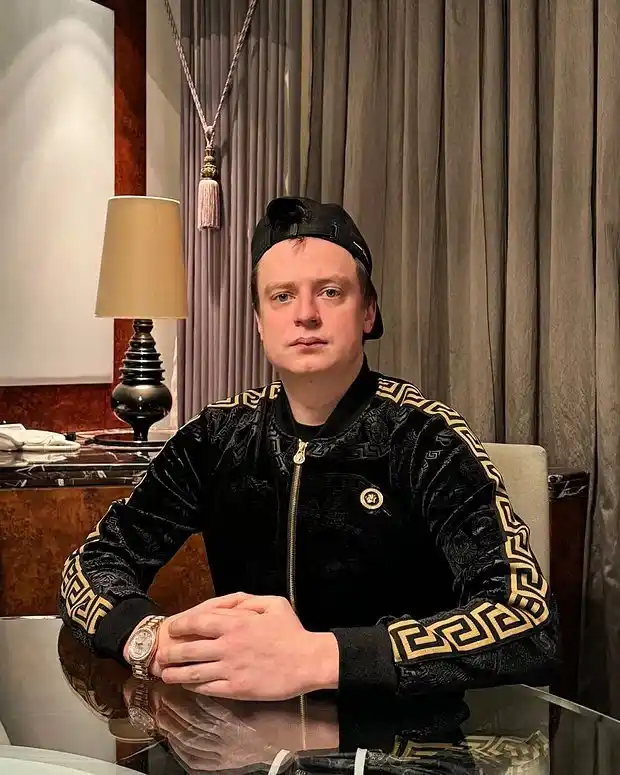
But if Mellstroy’s history teaches us anything, it’s that the man rarely moves quietly. His three million Instagram followers and nearly one million Telegram subscribers have watched him get banned, unbanned, sued, detained, cancelled, uncancelled, “destroyed,” then re-inflated back to internet celebrity status more times than most influencers switch management teams. Kazakhstan’s investigation, opened on 15 November, is simply the latest plot twist.
Yet there is something almost Shakespearean in watching a character so committed to self-inflicted chaos continue rising from the debris he leaves behind. For British readers encountering him for the first time, this isn’t just another case of a streamer gone rogue. It’s the story of a man whose notoriety seems to metabolise every scandal into fresh fuel — sometimes frighteningly so.
The Charges in Kazakhstan — Illegal Casinos, Viral Stunts and a Digital Trail That Never Sleeps
Kazakhstan’s Economic Investigation Department in Astana alleges that Mellstroy may be tied to illegal online gambling operations — a serious accusation in a country where the digital casino market is tightly restricted. According to official sources, the probe relates to the organisation of unlicensed online casino activity, something Mellstroy has long been linked to by reputation, even if rarely by formal prosecution.
But the Kazakh story doesn’t stop at gambling. The man’s influence on vulnerable audiences has sparked other incidents across the region. In one viral episode, a resident of Taldykorgan was reportedly so desperate to win Mellstroy’s promised prizes that he legally changed his name to “Game Mellstroy Serikuly.” Another man ran through a shopping mall wearing nothing but underwear and a sign that read “Give Me a Flat,” claiming he was completing a challenge for Mellstroy’s online “game.” He received 15 days of arrest for the stunt — but the chaos, as always, travelled far beyond the moment.
And this, perhaps, is Mellstroy’s true trademark: the ability to turn strangers into actors in his constantly expanding theatre of provocation. It’s both the reason authorities are increasingly alarmed — and the reason his crowd keeps growing.
Trouble in Belarus and Russia — When a Streamer Becomes a Multinational Headache
Kazakhstan isn’t the first country to pursue the streamer. Just weeks earlier, Belarus also placed Mellstroy on its wanted list, citing public disorder, unlawful mass events, and online provocations encouraging followers to engage in antisocial behaviour for cash rewards.
Belarusian authorities went a step further: on 4 November 2025, a Minsk court reportedly designated all Mellstroy’s online channels — along with his logos and watermarks — as “extremist materials.” This kind of classification is rare and usually reserved for political groups, which tells you everything about how seriously the state now views his influence.
Meanwhile, Russia had already announced him wanted back in 2024. The cumulative effect is striking: three countries, three investigations, and one digital personality capable of triggering a regional legal storm with a single livestream.
For British readers, this places Mellstroy Kazakhstan in a curious category: not simply a controversial entertainer, but a cross-border cultural phenomenon who forces governments to grapple with a type of influence no traditional legal framework was designed to handle.
The Mellstroy Kazakhstan Scandal That Started It All — And Why It Still Haunts Him
Long before the wanted lists and political statements, there was the 2020 livestream — the moment that transformed Mellstroy from an eccentric digital stuntman into a central figure of internet outrage. During a broadcast in a Moscow City apartment, he violently slammed a woman’s face against a table multiple times in front of thousands of viewers. She filed a police complaint, and he received a six-month sentence of corrective labour.
To this day, the clip circulates across forums, social media, and commentary channels — resurfacing every time another scandal breaks. It has become the definitive image of Mellstroy’s recklessness, a grim reminder that behind the spectacle lies something darker. No amount of fast cars, casino streams, or million-dollar giveaways has fully erased it.
In Britain, where public conversation around influencer responsibility is becoming sharper by the year, Mellstroy stands as a cautionary tale — a reminder that fame earned without guardrails often turns into notoriety that cannot be controlled.
Mellstroy Kazakhstan: Tragedy, Influence, and the Uncomfortable Conversation Behind the Headlines
The most disturbing consequence of Mellstroy’s influence emerged not from a casino stream, but from a tragedy. Russian MPs reported that a 15-year-old boy died after inhaling “laughing gas,” allegedly inspired by Mellstroy’s behaviour shown in an interview. Whether direct or indirect, the case sparked national debate about digital role models — and the sometimes lethal gap between online shock content and its offline consequences.
Kazakhstan’s current concerns echo this broader anxiety: where does entertainment end, and responsibility begin? And how far does a creator’s liability stretch when millions of young men treat him as a blueprint for boldness, chaos, or fame?
For all his bravado, Mellstroy now stands in the centre of a conversation that the UK has been having for years — one about the dangers of algorithm-powered influence operating without limits.
New Casinos

TurboWins Casino offers a powerful 200% welcome bonus up to €5,000 with weekly cashback, high-speed slots, fast payments and a secure mobile-optimized platform.

WinShark Casino offers one of the largest welcome bonuses on the market with free spins, frequent promotions, popular slots and a secure mobile-optimized platform.
PiperSpin Casino offers a generous welcome bonus with free spins, a wide selection of slots and original games, fast payments and a secure mobile-optimized platform.
Kaasino is a bold new online casino for UK players. Claim up to €1000 + 300 free spins, play top slots, crash games, live tables, and enjoy fast payouts with PayPal, Skrill or crypto.
Mellstroy Casino Picks

Kaasino is a bold new online casino for UK players. Claim up to €1000 + 300 free spins, play top slots, crash games, live tables, and enjoy fast payouts with PayPal, Skrill or crypto.

WinShark Casino offers one of the largest welcome bonuses on the market with free spins, frequent promotions, popular slots and a secure mobile-optimized platform.

TurboWins Casino offers a powerful 200% welcome bonus up to €5,000 with weekly cashback, high-speed slots, fast payments and a secure mobile-optimized platform.

PiperSpin Casino offers a generous welcome bonus with free spins, a wide selection of slots and original games, fast payments and a secure mobile-optimized platform.


Mellstroy-casino.co.uk is intended only for users over 18 years old. Gambling can be addictive — play responsibly.
More information at BeGambleAware.org
© 2026 Mellstroy-casino.co.uk — All rights reserved.